The Nigerian Space Symposium (NSS) is one of the largest and most prestigious gathering of Nigeria’s space community, created to celebrate and connect Nigerians globally in the space sector.The second edition of the symposium was held on November 21, 2025 at the Mountain Top University, Makogi Oba, Ogun State, Nigeria. The 2025 symposium themed “The Future of Space, AI & Data in Nigeria’s Economy and Security” kicked off at the University Chapel at 10:00 am with an opening prayer and welcome remarks outlining the mission of NSS 2.0. The event anchor further introduced the distinguished guest speakers across the academia, research institutions, government bodies, private industry and young professionals.
Among the notable attendees were the Vice-Chancellor of Mountain Top University, Prof. Elijah Ayolabi; Dean, College of Basic and Applied Sciences, Mountain Top University; The Leibniz Institute of Atmospheric Physics, University of Rostock, Prof. Jorge Chau; Prof. Andrew Akala (University of Lagos); NASRDA Research Director, Prof. Babatunde Rabiu, and the Head of Space Education and Outreach Programmes (SEOP) Division of the United Nations African Regional Centre for Space Science and Technology Education in English (UN-ARCSSTE-E), Dr. Samuel Anih, who ably represented the Executive Director of UN-ARCSSTE-E, Engr. Dr. Seyi Olatoyinbo. Students from both secondary and tertiary institutions were also in attendance, making the symposium an inclusive platform. Hence, the symposium served both as a knowledge-sharing forum and a networking arena bridging academia, industry, government, and the youth.
The plenary sessions focused on four major thematic areas:
- Space Applications for Economic Growth: Speakers emphasized the role of satellites, remote sensing, and Earth-observation data in driving national development. Discussions explored how space technologies can support agriculture, urban planning, environmental monitoring, disaster management, and natural resource oversight.
- AI and Data Integration in Space Technology: The importance of robust data infrastructure, AI-powered analytics, and capacity building in data science was underscored as essential for Nigeria to fully harness space-derived information.
- National Security and Governance: Experts highlighted how satellite imagery and data analytics strengthen border security, infrastructure monitoring, climate and environmental surveillance, disaster response, and strategic decision-making.
- Collaboration and Networking (Local & Global): The symposium highlighted fostering collaborations between government, academia, industry, and diaspora to advance Nigeria’s space and AI ecosystem.
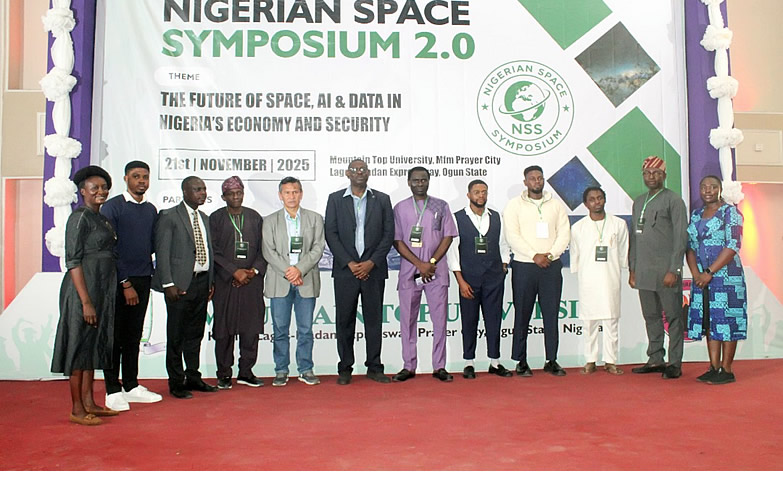
Guest speakers were later invited to the stage for the photo session as part of the documentation of the event.
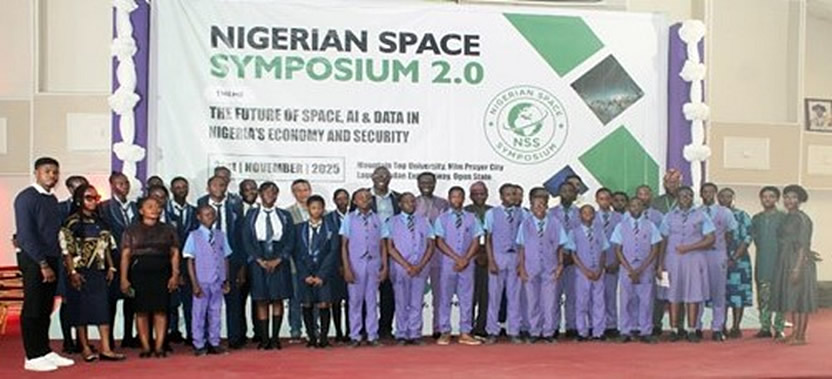
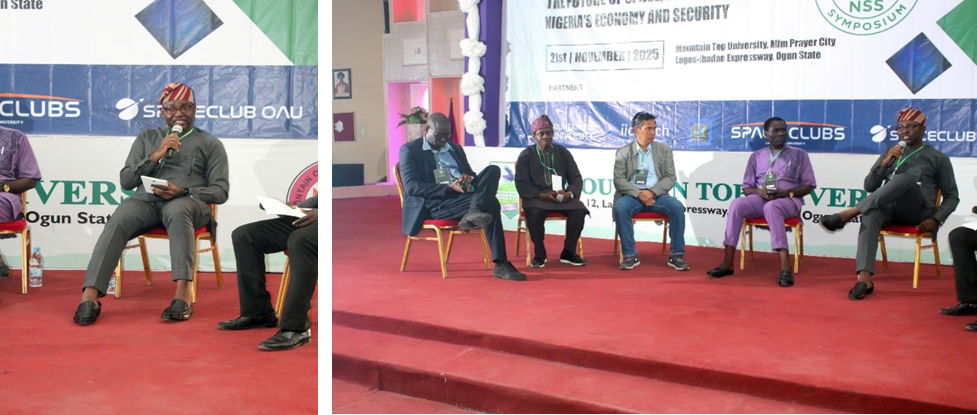
The SEOP Team of UN-ARCSSTE-E set up an exhibition booth during the symposium, where they engaged participants, provided educational briefings, and shared space-themed learning materials with secondary and tertiary students and other attendees to promote awareness and stimulate interest in space science and technology.
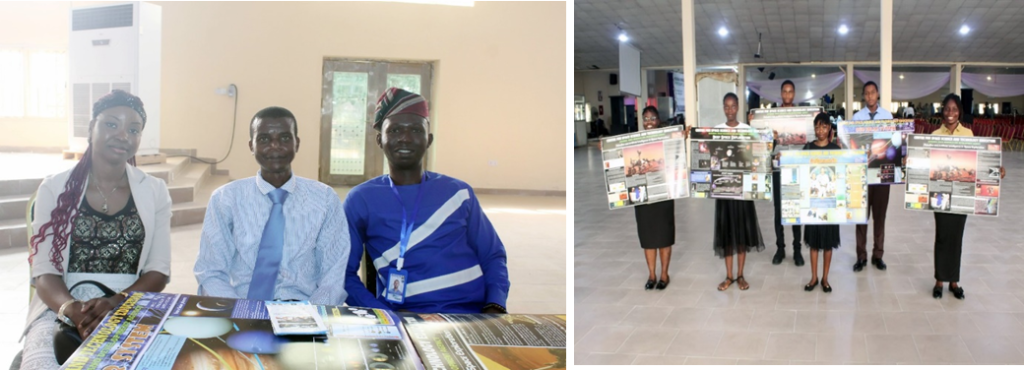
The UN-ARCSSTE-E SEOP Team at the Exhibition Booth (left) and Group Photo of Students of Mountain Top University displaying Space Education Series Educational Posters given to them by UN-ARCSSTE-E at the event (right).
In conclusion, the Nigerian Space Symposium 2.0 marked a significant milestone in Nigeria’s efforts to align with global space, AI, and data trends by developing local talent, promoting data-driven economic growth, enhancing security and resource management, fostering international collaborations, and increasing national awareness, thereby supporting stronger policies and investment in the country’s growing space sector.